Key takeaways
Multiple pregnancies need more frequent monitoring and specialist care because there is a higher chance of complications.
Your care should be tailored to your type of multiple pregnancy, including whether your babies share a placenta or amniotic sac.
Ask questions and mention any symptoms or concerns, even if you think they’re normal.
Your care checklist can help you understand the care you should expect and can be taken to appointments to discuss with your healthcare team.
Pregnancy with more than one baby is managed differently to a singleton pregnancy because there is a higher chance of complications. That can sound worrying, but your midwifery team will keep a close eye on you and your babies so any concerns are picked up early.
Our care checklist [opens as PDF] covers the level of care you should be offered from the time of your first hospital scan, in addition to the routine care that is offered to all women during pregnancy. They follow national best practice (NICE Quality standard 46) with the aim of reducing risks and improving outcomes for you and your babies.
Your first ultrasound scan should take place at around 11-14 weeks’ gestation. You’ll be offered more regular appointments and ultrasound scans than in a singleton pregnancy and your care should follow a pathway depending on the type of twin pregnancy you have, for example, whether your babies share a placenta or sac or have one each. If you don’t yet know your multiple pregnancy type it would be worth reading about the types of twin pregnancies before accessing the right checklist for you. If your babies share both a placenta and a sac, an individualised care checklist will be put together for you by your healthcare team.
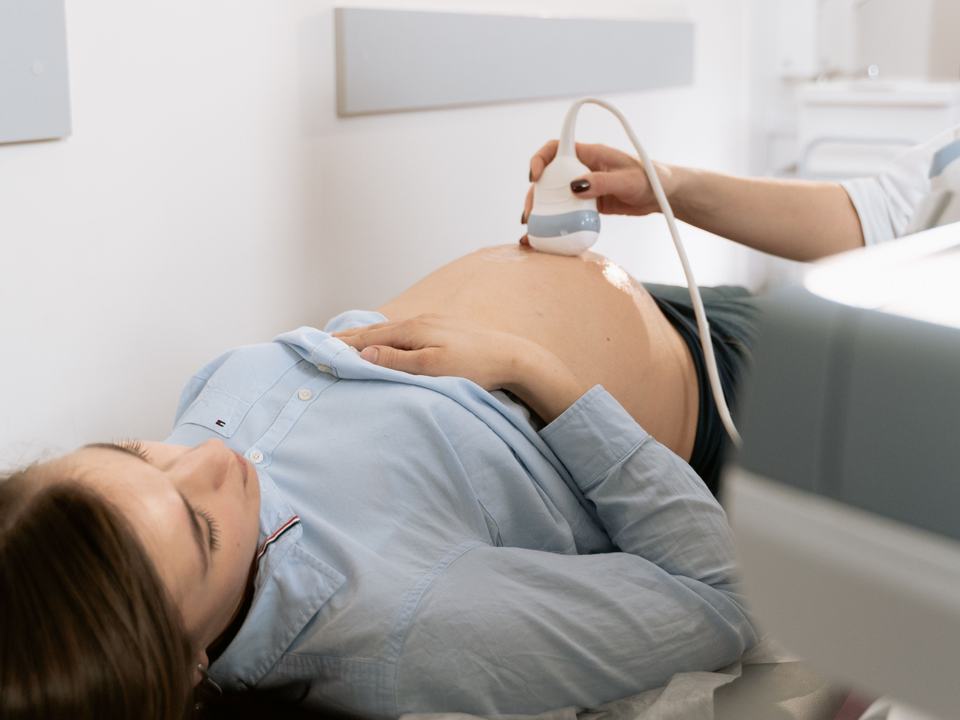
Anomaly Scan
You will be given an anomaly scan at 18-22 weeks to check your babies are developing normally and you will be scanned throughout your pregnancy to check on your babies’ growth and positioning. The timing and frequency of these scans varies according to the number of babies, their chorionicity (whether they share a placenta) and amnionicity (whether they share a sac), hospital procedure, and whether anything else needs monitoring.
Screening Tests
You will be offered some screening tests during pregnancy to try to find any health problems that could affect you or your babies, such as, infectious diseases, Edwards', Down's or Patau's syndrome, or physical abnormalities. The tests can help you make choices about care or treatment during your pregnancy or after your babies are born.
The sonographer can take measurements during the routine scan at 11-14 weeks to assess the babies’ chances of having Down’s syndrome.
Whether your babies are identical or non-identical and whether they share a placenta or not, is very important in understanding your options.
It is important to read up on screening and write down any questions you may have so you can ask your consultant and midwife. This will help you make decisions that work best for you and your family.
Making these decisions can be difficult. You may like to speak with your hospital screening midwife or Antenatal Results and Choices (ARC), a charity that specifically supports expectant families throughout difficult decisions in the screening process.
There are also non-invasive DNA tests for Downs Syndrome, Edwards syndrome and Patau’s syndrome, often branded as the Harmony test (or NIFTY/SAFE test) available. These are mainly available in the private sector. They are not yet widely available in NHS hospitals although some are participating in research.
You can find out more information on screening on the NHS website.
Feel prepared for life with twins
Expecting twins? Get practical, bite-sized guidance plus access to an interactive drop-in session where you can ask questions, with our Preparing for twins on-demand course.
Your specialist team and appointments
Throughout your pregnancy you should be seen by a specialist team, who have more knowledge about multiple pregnancies. This should include a midwife, sonographer and consultant (doctor). You might also be seen in a specialist twins or multiples clinic, where the team is very used to looking after families like yours.
You may have a list of questions. Don’t feel rushed at your appointments: if you need extra time to work through your list, ask for it. You may want to know, for example, what the hospital procedure is for twin births and what special arrangements there are for antenatal care in twin or more pregnancies. It may also be useful to find out if the hospital has a midwife who specialises in breastfeeding support for mothers of multiples.
Make sure you mention any symptoms you are having, even if you think they are probably normal. The consultant (doctor) or midwife can put your mind at rest or investigate further if need be.
If you are not receiving the care you would expect please raise it with the PALS team (patient liaison) at your hospital
Feel free to share the care checklist with your midwifery team and download it to take along to each appointment.
For your appointment
-
Antenatal care checklist
Download PDF (800.2 KB)
Published