Key takeaways
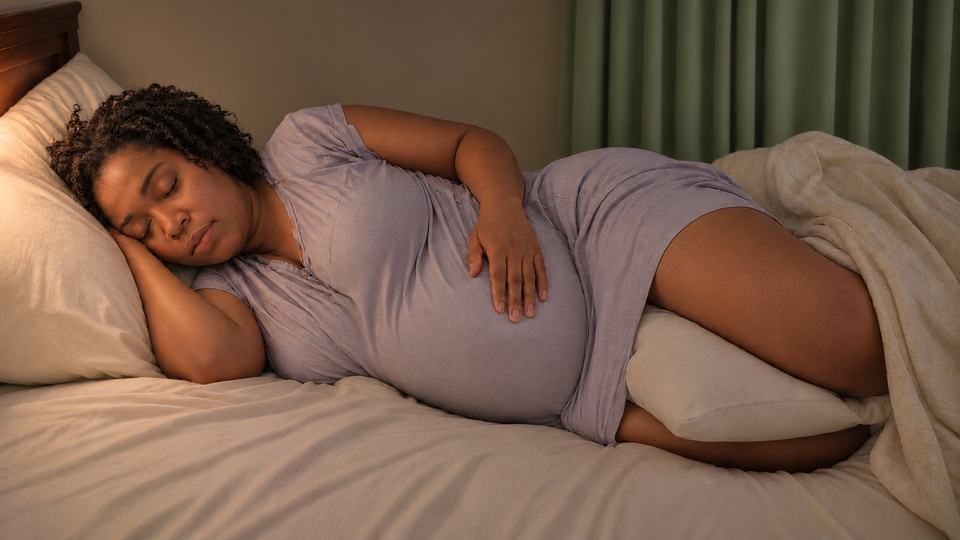
Go to sleep on either your left or right side from 28 weeks
If you wake up on your back, turn onto your side before going back to sleep
Pillows under your bump and between your knees may help you feel more comfortable
Research into sleep in twin pregnancies is limited, so early findings shouldn’t be used to set strict sleep targets
Why sleep can be challenging when you’re expecting twins
Getting comfortable at night can become harder as your twin pregnancy progresses. Your growing bump, aches and heartburn may interrupt your sleep or make it difficult to settle.
Researchers are exploring whether sleep quality, duration and position affect pregnancy outcomes. Most evidence comes from pregnancies involving one baby, with much less research focused specifically on twins.
This matters because twin pregnancies have higher risks of complications, including premature birth and difficulties with babies’ growth. Understanding whether sleep plays a role could help researchers develop advice that better supports families.
For now, there’s clear practical guidance about going to sleep on your side from 28 weeks. However, questions remain about how other aspects of sleep affect twin pregnancies.
Know the care you should be receiving
Empower yourself by knowing what type of care you should be receiving at each stage of your pregnancy and the questions you should be asking by downloading our antenatal care checklist.
How twin pregnancy can affect your sleep
As your babies grow, the physical demands of pregnancy can make restful sleep harder. Backache, difficulty finding a comfortable position and needing to change position may leave you feeling tired.
Spending longer in bed doesn’t always mean you’re getting better sleep. Broken sleep can affect how rested you feel during the day.
A Spanish study compared sleep in 62 women expecting twins with 143 women expecting one baby. It found greater sleep disturbance and difficulties with daytime functioning among those expecting twins. However, it didn’t establish that overall sleep quality was consistently worse in twin pregnancies. [3]
Your experience may also change throughout pregnancy. A position that felt comfortable earlier on may become less comfortable as your bump grows.
If sleep problems are affecting your daily life, mention them to your midwife or maternity team. You don’t need to wait until you’re struggling to cope before asking for help.
Sleep position and duration: what the evidence means
Research in pregnancies involving one baby has linked going to sleep on the back after 28 weeks with an increased risk of stillbirth. Current NHS advice is to go to sleep on either side.
One possible explanation involves blood flow. In later pregnancy, lying flat on your back allows the weight of your womb to press on major blood vessels. This can reduce blood returning to your heart and affect blood flow to your babies and placenta.
A larger womb means this is an important question for twin pregnancies. However, researchers haven’t yet established exactly how these effects compare with pregnancies involving one baby.
A UK feasibility study involving 181 twin pregnancies explored sleep alongside other possible factors affecting pregnancy outcomes. Going to sleep on the back was less common than in previous research involving pregnancies with one baby. [4]
The study also identified possible links between sleep patterns and poorer outcomes, including sleeping for nine hours or more. These were early findings from a small study designed to guide further research. [4]
They don’t prove that longer sleep causes harm. They also don’t provide enough evidence to recommend restricting sleep, deliberately waking during the night or choosing only the left side.
The practical advice remains to go to sleep on either your left or right side from 28 weeks.
We've got you
If you need to talk things through, we're here to help. Our trained helpline volunteers are here to listen and everyone you speak to is a parent of twins, triplets or more, so they get it.
Finding a comfortable position and getting support
Try placing a pillow under your bump and another between your knees. These may help support your body and make sleeping on your side more comfortable.
The advice to settle on your side applies to bedtime, daytime naps and going back to sleep after waking during the night.
If you wake up on your back, don’t panic. Simply turn onto your side before going back to sleep. You can’t control every movement you make while you’re asleep.
Sleep research should help you make informed choices, without adding pressure to achieve a perfect night’s rest.
If pain, heartburn or persistent sleep difficulties are making nights hard, speak to your midwife or maternity team. They can discuss your symptoms and help you find support suited to your pregnancy.
References
- Warland, J., et al. Maternal sleep during pregnancy and poor fetal outcomes: A scoping review of the literature with meta-analysis. Sleep Medicine Reviews, 2018; 41: 197–219.
- Cronin, R.S., et al. An Individual Participant Data Meta-analysis of Maternal Going-to-Sleep Position, Interactions with Fetal Vulnerability, and the Risk of Late Stillbirth. EClinicalMedicine, 2019; 10: 49–57.
- de la Calle, M., et al. Assessment of Sleep Quality in Spanish Twin Pregnancy: An Observational Single-Center Study. Twin Research and Human Genetics, 2024; 27(2): 97–104.
- Greatholder, I., et al. Evaluating antenatal risk in twin pregnancies—A feasibility study to identify modifiable factors associated with adverse pregnancy outcomes. Acta Obstetricia et Gynecologica Scandinavica, 2023; 102(5): 585–596.
Connect with other parents
Our online communities are by you and for you. They're here to offer support and shared understanding for parents of twins, triplets or more.
Published
